
Autonomous AI Attacks: How Machine-Driven Threats Plan, Execute, and Adapt
06:04:2026
Cybersecurity is entering a new phase characterized by autonomous AI attacks, where operations are driven by AI systems rather than direct human control. These systems operate at speeds and scales beyond human capability, continuously learning from unsuccessful attempts.
In this article, we examine how autonomous threats function, how they challenge AI-driven defenses, and the technical vectors that enable them.
How Autonomous AI Attacks Operate
Traditional cyberattacks rely on human decision-making, which inherently limits speed and scale. Human operators can manage only a finite number of intrusions. Responding to new defenses requires time to reassess conditions and adjust tactics.
Autonomous AI attacks do not face these constraints. AI-driven agents can replicate across many systems, with each instance executing tailored activities in parallel. They conduct reconnaissance, exploit vulnerabilities, and exfiltrate data in a continuous, self-directed cycle.
Researchers have demonstrated these capabilities through a prototype called ReaperAI. It integrates multiple stages of the cyber kill chain, from initial scanning through data exfiltration, into a single automated process. The system operates without human oversight and independently iterates.
When an attempt fails, the AI evaluates the outcome and selects an alternative approach. This system is representative of the increasing sophistication of emerging agentic attack architectures that can plan, execute, and adapt full-spectrum intrusions autonomously.
AI-vs-AI Conflict and Adversarial Model Interaction
Attacker-operated AI systems can outpace defensive models by continuously adapting tactics to evade AI-driven controls, for example: by modifying code variants and phishing attempts.
As AI-driven attacks increase, security teams are adopting AI within defensive operations, resulting in an increasing frequency of model-to-model interactions. Adversaries use AI to launch attacks at increased speed and scale, while security teams use AI to automate analysis and response. Teams that augment their systems with AI position themselves to keep pace.
Attacker-operated AI systems aim to outpace defensive models by continuously adapting tactics to evade AI-driven controls. For example, AI-based malware generators can iteratively modify code variants and evaluate them against security filters, identifying which versions evade AI-powered antivirus systems.
They can also generate phishing content that exploits features that detection models classify as benign, enabling evasion of automated filters. In response, security teams use AI for continuous adversarial testing: generating realistic attack variants, measuring detection performance, and tuning models and controls based on the results. Over time, parts of the attack-defense cycle can form a closed loop in which models adapt to each other.
Core Technical Vectors Behind Autonomous AI Attacks
Autonomous AI threats rely on several key technical vectors. Understanding these vectors is critical to developing effective defenses.
Training Data Corruption

Attackers can tamper with the data an AI model learns from, affecting model outputs. Altering a small fraction of training data can lead to targeted misclassifications. In a security context, a compromised training set could cause an intrusion detection model to classify malicious activity as benign, reducing its effectiveness. These attacks often remain difficult to detect, as the affected model may perform as expected in most scenarios and deviate only for inputs intentionally influenced by the attacker.
Inference-Time Control Hijacking
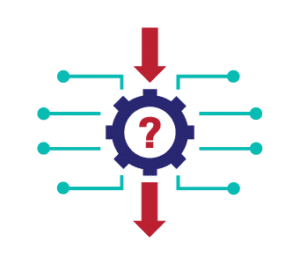
Attacker AI systems target the inference phase by supplying carefully crafted inputs at runtime. These inputs influence model behavior without modifying the underlying model or its training data. Rather than modifying the model itself, an adversary supplies input data designed to cause misinterpretation or unintended actions.
These inputs may include subtly altered images that mislead a classifier or deliberately structured text prompts that prompt a language model to bypass safeguards. Inference-time attacks enable real-time manipulation of AI systems and, because the underlying model remains unchanged, can leave limited conventional indicators for defenders to detect.
Model Supply Chain Compromise
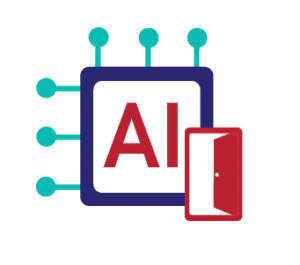
Attackers increasingly target the AI supply chain, including models and code sourced from third parties. Public model repositories and libraries present particular exposure, as poisoned datasets or compromised model files can circulate under the appearance of legitimacy.
Adversaries may embed hidden backdoors into AI components that organizations incorporate without detection. For example, a modified model may appear valid and perform effectively during initial evaluation, then behave as expected until a specific trigger input activates unintended behavior. These supply chain attacks compromise AI integrity at the source, introducing latent risk into otherwise trusted components.
Prepare Edge Environments for Autonomous AI Threats
Edge networks require the same level of vigilance as core systems when addressing AI-driven threats. SealingTech delivers secure edge computing solutions integrated with Zepharis™ AI (formerly Operator X) to support operations in air-gapped environments and enhance operator capabilities at the tactical edge.
Learn more about how SealingTech can strengthen critical systems against evolving AI-driven risks.
Related Articles
CIRCIA’s Coming: Is Your Business Ready for Mandatory Cyber Reporting?
In March 2022, the Cyber Incident Reporting for Critical Infrastructure Act(opens in new tab) (CIRCIA) was signed into law, creating the federal government’s first comprehensive, cross-sector framework for mandatory cyber…
Understanding Zero Trust Network Access (ZTNA)
Zero Trust Network Access replaces implicit network trust with continuous, identity-based verification of every access request. Rather than placing a user on the network, it grants application-level access after confirming…
National Infrastructure Priority Status: Benefit, Impact, and Why It Matters
The United States is in the midst of a generational investment in the nation’s infrastructure. This modernization effort (spanning energy, transportation, water, and digital systems) arrives alongside an era of…
Could your news use a jolt?
Find out what’s happening across the cyber landscape every month with The Lightning Report.
Be privy to the latest trends and evolutions, along with strategies to safeguard your government agency or enterprise from cyber threats. Subscribe now.